
The Unspoken Cryptography History of Poles in World War II
By SY Cheng
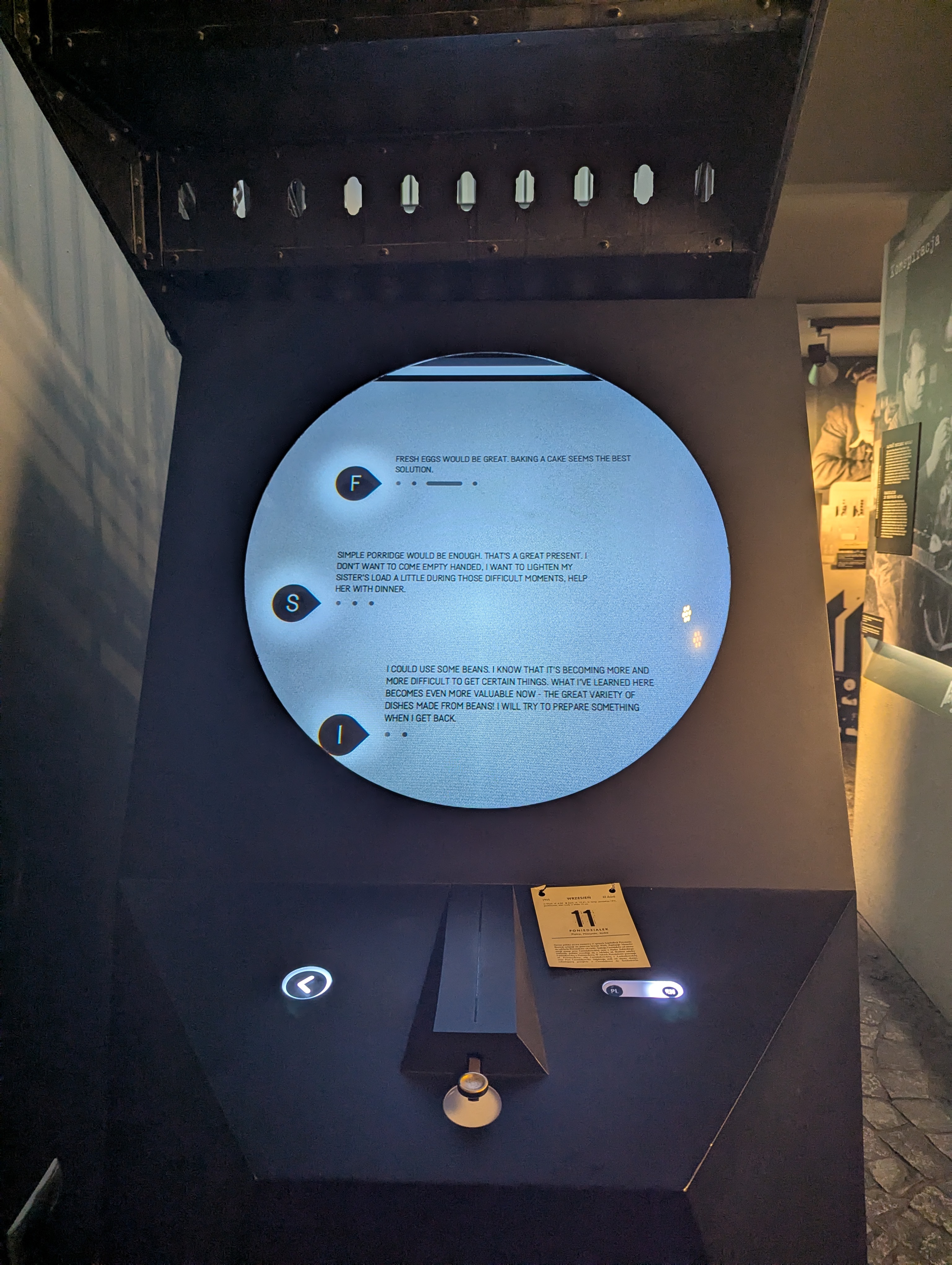
Morse Code Simulator in Warsaw Uprising Museum. Photo by SY Cheng
When I first visited the Warsaw Uprising Museum, all I expected was photographs, documents, uniforms, and resistance narratives. I was surprised at the extent of how the uprising was backed by early communicative technology and wartime intelligences. Amongst all the weaponry and personal stories curated in the museum, I was caught off guard by a device simulating a morse code encoder. Underground fighters had connections throughout occupied Poland via a variety of connective technologies, which included encrypted telegrams, clandestine radios, and Morse code transmitters. What I realised from the visit was that technology at the time was not just a tool, but the lifeline to independence. This is the moment I came to appreciate that technology was more than simply a tool in a “denial-of-service” scenario such as the German occupation; it served as a foundation of resilience for Polish national identity. This small encounter with this Morse Code simulator guided me to dig deeper into how technology and information impacted wartime tactics and explore the broader implications of the use of technology during wartime.
Polish Contributions in World War 2
In my research, I discovered that the Poles contributed a lot to shrinking the wartime of WWII, and that this history has only been barely touched upon. Right after the end of World War I when Poland achieved independence and was still fighting a war with the Soviet Union, a Polish military intelligence unit called the Cipher Bureau was established. Cipher Bureau recruited most of their talents from Poznan University’s cryptology course, key figures include Marian Rejewski, Jerzy Różycki, and Henryk Zygalski (Warsaw Institute, 2021). Their goal was to work on cracking German secret communications. One of the most groundbreaking works from the Cipher Bureau was cracking the German Enigma Machine. The encryption device is a system of rotating rotors and plugboard substitutes utilized in the Enigma’s encryption, which produced a staggering amount of possible key combinations, exceeding 150 quintillion in some military versions. Even exact letters were never encrypted in the same way twice because each stroke of the keyboard affected the electrical channel (Encyclopedia Britannica, 2019).

Setup of the Enigma Machine in Enigma Cipher Center. Photo by SY Cheng
What this interwar work proved was that cipher work should be carried out by mathematicians and not linguists as was previously practiced in the field. In July 1939, weeks before World War II, the Poles discretely gave British and French intelligence access to their Enigma prototypes and deciphering techniques, and the Bomba, a device that decrypted Enigma messages. Because the Poles had been so far ahead of other countries in their deciphering work, later the Poles shared their knowledge on cracking the Enigma at the Kabaty Conference. The knowledge shared with the allies was eventually implemented into Bletchley Park, a ciphering center outside of London. These Polish contributions and knowledge transfer proved key to shortening the war and played an important role in the ultimate victory of Allies’. Millions of lives have been estimated to have been spared and World War II was shortened by over three years, an achievement directly attributable to the efforts of the Polish and Allied codebreakers (Enigma Cipher Centre, 2025). The efforts by the three key figures were severely undermined by people, as the fact was not to be mentioned after the liberation from the Germans till the 2000s internationally.
Enigma Cipher Center in Poznan
In my research, I also discovered the existence of a dedicated museum on the story of cracking the enigma and cryptography in Poznan. Opened in 2021, the Enigma Cipher Center was established to commemorate the contributions of the cryptographers and to popularize this hidden part of history of Polish contributions to the war. The museum is located in Poznan because the first cryptology course in the interwar period was located at the University of Poznan. All the key figures working on breaking the Enigma code started their careers in Poznan.
The Enigma Cipher Center is a very interactive museum with a lot of stations with workshops, puzzles, reconstructed cipher machines for visitors to experience. What I found most fascinating is that the museum was visited by people of all ages. The museum is divided into three parts: The first part looks at the history of cryptography, in the second section, you can learn about key figures involved in cracking the enigma machine. The final part of the museum looks at post-war computer evolution. I enjoyed every part of the museum. The curators did an excellent job at explaining such complicated cryptography concepts in easy terms that everyone can understand. The process is even more understandable due to replicas of machines and interactive displays set up to simulate the process of each encryption method.

Using Comb as an Encryption Tool. Photo by SY Cheng
One of the first installations that caught my attention was how a comb was used to encrypt messages in the early interwar period. A table was set up by the entrance with a comb that intentionally was missing certain teeth. When the comb was placed on a text, the existing teeth covered words, only revealing the secret message in the gaps. In the first section of the museum, I also found traces of knowledge that I had learned in my introductory classes at Syracuse University’s iSchool, which piqued my interest and made me more interested to find out about the subjects. From Caesar Ciphers, to steganography, to morse codes, to Playfair Cipher, the museum first covered a wide range of encryption methods from past to present. The educational stations were always occupied by visitors trying to break or encrypt messages. It was an eye-opening experience for me too as I navigated through the different methods humans have used to conceal hidden messages. I was absolutely surprised to learn that the history of cryptography can be traced back to the 1900 BC and 100BC when Julius Caesar came up with the world-renowned Caesar Cipher.
Continuing to the other parts of the museum, I was then introduced to the key figures of this important part of history. Prior to going to the museum, I knew the basic information and facts of the Enigma machine, but what stood out to me the most is the fate of the people involved in cracking the machine. When the work began right after World War I, the preparation took over four years. It started at the University of Poznan, but then slowly transformed into the government office known as the Cipher Bureau.
Learning about the Cipher Bureau and the contributing mathematicians gave me new perspectives on the history of the Warsaw Uprising. Beyond weaponry and violence stands secrecy and information. The pre-war intelligence laid a groundwork for networks of underground communication in occupied Poland. This transferable knowledge of cracking German Cipher machines greatly helped the underground with its contract with the Polish Government in Exile. The use of encryption during the Uprising demonstrated not only technological continuity with the interwar Cipher Bureau but also a moral continuity: the belief that information and secrecy could preserve identity even if territory and governance were lost.
The moral and technical perspectives of these underground networks of communication remain fascinating for me to dig deeper. It shows how cryptography is not just a tool, but a language for survival during harsh times. The most remarkable takeaway from the Warsaw Uprising Museum was the story of the Lightning Radio Station (Błyskawica), built in 1943 by Antoni Zębik “Biegły” and Bolesław Drodż. The broadcasts constituted a vital informational and psychological conduit between the crippled city and the outside world. The patriotic song “Warszawianka” (The Song of Warsaw) aired for the final broadcast on October 4, 1944, as the siege was approaching an end. The machinery was then purposefully destroyed to prevent it from being seized by German forces. Both the radio waves and the secret ciphers had been far more than simply wartime technology; they suggested a continuity of resistance and intelligence from earlier encryption to underground communications. Throughout wartime, the unseen battlefields of information wars and the overlooked soldiers that were fighting with intelligence as resistance are not properly recognized.
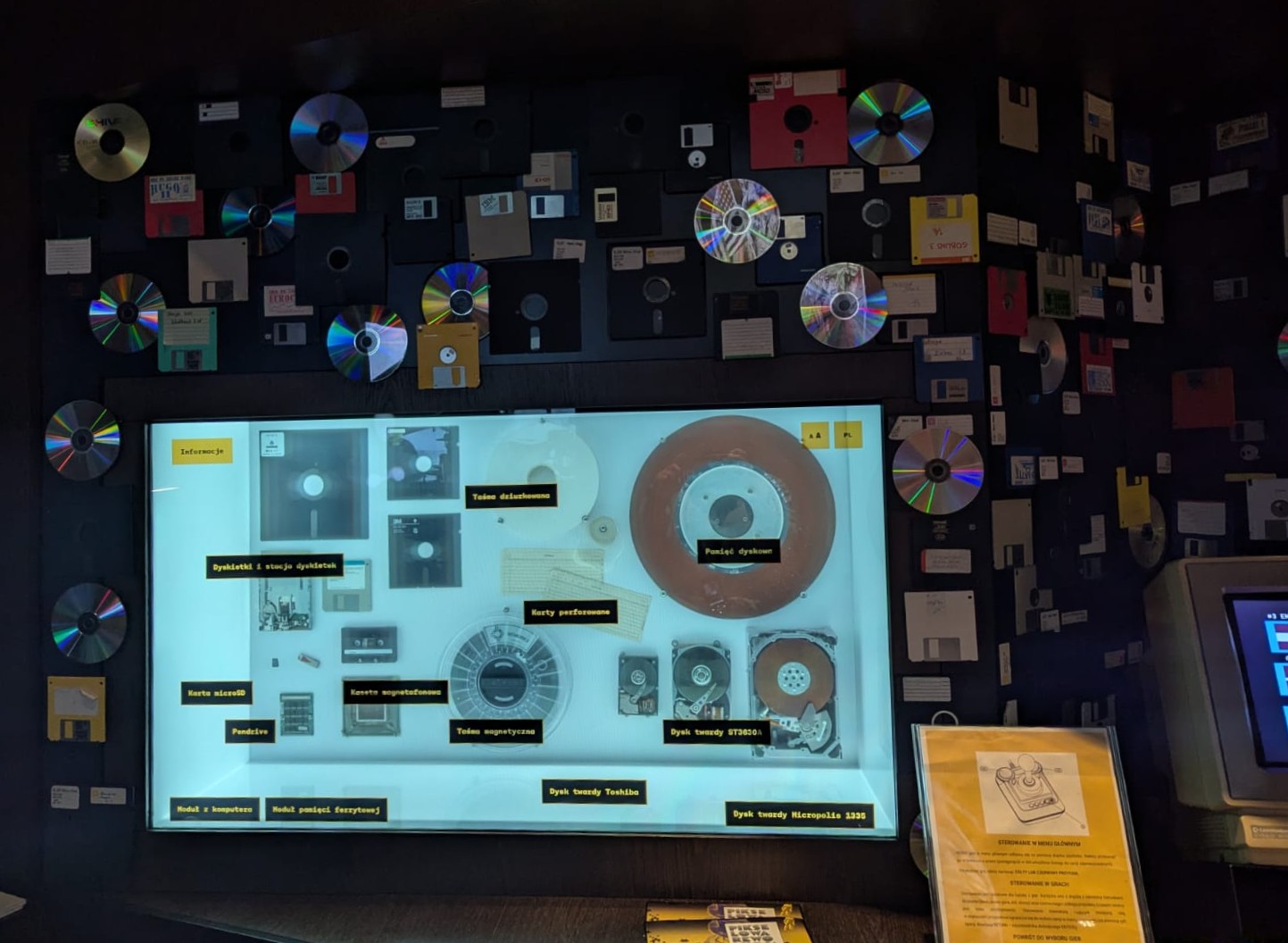
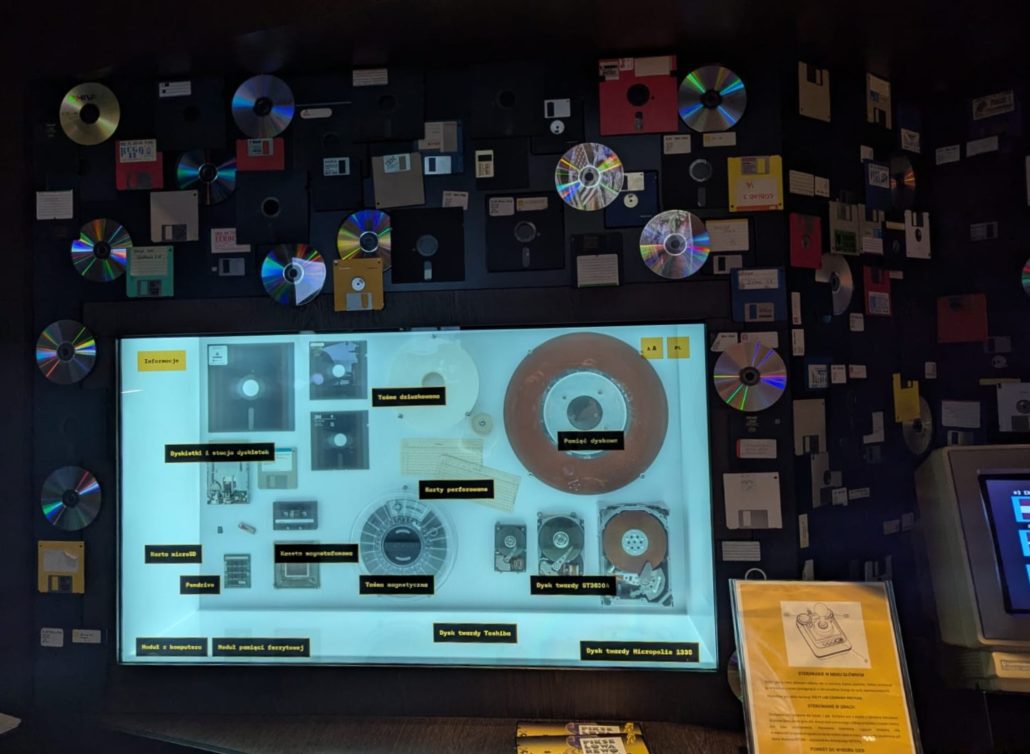
Modern Encryption Technology. Photo by SY Cheng
These two experiences in the Warsaw Rising Museum and the Enigma Cipher Center made me reflect on the current world we are living in today. Our information today is protected by multiple encryption methods developed by humans for centuries. Every encryption today, from personal data in banking services, to corporate level secrets, to state information systems, traces back to the discovery by the Poles which emphasized that instead of linguists, mathematicians are key to cracking cryptography. Polish cryptography’s history presents a case study of how innovation can prevail over hardship. Despite the fact that the Polish contributions have not been valued enough, the Poles proved that intelligence was capable of overcoming oppression during wars and foreign occupation. I now have a deeper comprehension of the connection between technology and human resilience after learning about the Polish experience and successes. Whether using digital ciphers today or Morse code in 1944, cryptography is still a universal language of defiance and an approach of protecting the most fundamental things: identity, freedom, and truth.
References
- Encyclopedia Britannica. (2019). Enigma | German code device | Britannica. In Encyclopædia Britannica. https://www.britannica.com/topic/Enigma-German-code-device
- Enigma Cipher Centre. (2025). Csenigma.pl; >Enigma Cipher Centre. https://csenigma.pl/en/
- Poland in Exile – Polish Intelligence 1939-1945. (2015). Polandinexile.com. http://polandinexile.com/intelligence.html
- Rakus-Andersson, E. (2004). The Polish Brains Behind the Breaking of the Enigma Code Before and During the Second World War. Alan Turing: Life and Legacy of a Great Thinker, 419–439. https://doi.org/10.1007/978-3-662-05642-4_17
- Warsaw Institute. (2021, September 6). Warsaw Institute. https://warsawinstitute.org/90-years-polish-cipher-bureau/
- Warwick, M. (2024, May 8). The Warsaw Uprising of 1944. Medium.com. https://malwarwick-98471.medium.com/the-warsaw-uprising-of-1944-062a99c83d09

