

German Colonialism: The Forgotten Plight of the African Continent
By Mason Burley
 The global movement to decolonize knowledge has increasingly broadened the scope of historical responsibility, compelling former imperial powers to confront the intellectual, cultural, and material legacies of empire embedded in their universities, museums, and political institutions. Yet even as the conversation has expanded to include subtler forms of epistemic and institutional colonization, Germany remains strikingly marginal in contemporary debates about colonialism. This absence is particularly surprising given the violent character of German colonial rule in Africa and the extensive impact of its ethnographic collecting, racial science, and military repression. This essay argues that Germany’s erasure from mainstream conversations on decolonization results from a powerful combination of historical narrative hierarchy, institutional fragmentation, and a national memory culture overwhelmingly dominated by the Holocaust. These forces have produced a public discourse in which German colonialism appears as an “add-on” to, rather than a constitutive part of, the nation’s history. I further argue that although Germany has taken intermittent steps toward acknowledging and addressing aspects of its colonial past, these steps remain inconsistent, limited in legal scope, and often overshadowed by the persistence of colonial institutions themselves most prominently with the Humboldt Forum. By examining why Germany is consistently left out of global decolonial discourse, what policies and practices speak to (or strategically avoid) its colonial history, and what specific steps it has initiated toward reconciliation, this essay reveals the deep structural reasons why Germany still struggles to meaningfully situate its colonial history within its contemporary political and cultural landscape.
To understand Germany’s current silence, one must first situate its imperial history within the broader context of the late nineteenth- and early twentieth-century scramble for Africa. Between 1884 and 1919, Germany established colonial enterprises in present-day Namibia, Tanzania, Cameroon, Togo, Rwanda, and Burundi. These colonies, though acquired relatively late compared to British, French, or Portuguese holdings, were marked by extraordinarily brutal policies. In German South West Africa, for instance, the genocide of the Herero and Nama between 1904 and 1908 constituted one of the earliest and most systematic episodes of racialized extermination in the twentieth century. Forced labor regimes, land seizures, concentration camps, the mass expropriation of livestock, and institutionalized racial hierarchies defined German rule not only in Namibia but across its African empire. In German East Africa, the suppression of the Maji Maji rebellion (1905–1907) resulted in widespread famine, scorched-earth military campaigns, and the deaths of hundreds of thousands of Africans. Simultaneously, German anthropologists, ethnologists, and natural scientists collected tens of thousands of cultural objects and human remains, transporting them to Berlin, Munich, Hamburg, Leipzig, and other German centers of research. These collections, which still reside in German institutions today, reveal the extent to which German colonialism was as much an intellectual and epistemological project as it was a territorial one. Despite this history, Germany’s role in African colonialism rarely figures centrally in popular or scholarly decolonization conversations which raises the first main question: Why is Germany consistently not mentioned regarding colonial holdings?
Germany’s absence stems in part from the unique structure of its modern memory culture. Since the end of World War II, the moral, pedagogical, and political project of reckoning with National Socialism has dominated German historical consciousness. The Holocaust stands at the center of German public memory, public education, legal redress, and national self-understanding. This focus is ethically necessary but has generated what many scholars describe as a “hierarchy of guilt,” in which earlier forms of racial violence, especially those committed against African peoples, appear subordinate to, or overshadowed by, the crimes of the Third Reich. As a result, German colonialism is framed less as a defining national history and more as a historical footnote, an unfortunate but distant precursor to the “real” rupture of 1933–1945. This narrative hierarchy not only minimizes the significance of German colonial rule but also creates an intellectual environment in which institutions can frame colonial crimes as “less urgent” or “less central” than the Holocaust. The effect is an unintentional but powerful marginalization that influences public memory, academic funding, museum policy, and school curricula.
 A second reason for Germany’s silence lies in the fragmentation of its cultural and political institutions. Unlike former colonial powers with centralized ministries or national museums responsible for colonial collections, Germany’s system is dispersed across federal, state, municipal, and foundation structures. The Prussian Cultural Heritage Foundation, Länder governments, local museum associations, and independent scholarly institutes all share responsibility for holdings derived from colonial contexts. This decentralized system prevents the development of a cohesive national policy toward restitution, remembrance, or reparations. Without a strong central authority mandating decolonial action, progress occurs in piecemeal fashion: some museums launch provenance research, others remain passive; some cities rename streets or districts, others resist such changes. The absence of a unified legal or political framework enables inertia and allows cultural institutions to maintain colonial-era structures sometimes in ways that actively reinforce imperial nostalgia.
Furthermore, Germany’s relatively late entry into colonialism contributes to the perception that its empire was both short-lived and less globally influential than those of Britain or France. In international media narratives, postcolonial scholarship, and activist networks, especially those operating primarily in Anglophone and Francophone contexts, attention tends to gravitate toward former empires with long-standing linguistic and geopolitical reach. Germany, having lost its colonies after World War I, does not figure in the same way in the political, economic, or cultural infrastructures of the postcolonial world. This perception, though empirically misleading in terms of the intensity of German colonial violence, nevertheless affects how often Germany is invoked in broad decolonial critiques. The issue is compounded by Germany’s self-presentation in global diplomacy: officials have at times framed colonial wrongs as “historical tragedies” rather than as violations with ongoing legal and political implications. This rhetorical strategy has the effect of softening demands for accountability and, consequently, lowering Germany’s visibility in transnational reparations debates.
Although Germany’s colonial past is often minimized, it is not entirely absent from public policy. This leads to the second main question: What policies, laws, or practices in Germany directly comment on its colonial past? In the last decade, Germany has taken several steps to acknowledge aspects of colonial violence, though these actions vary in consistency and depth. One of the most significant was the 2021 decision by the German government to officially recognize the Herero and Nama genocide. This recognition, which followed years of diplomatic negotiation with Namibia, included a pledge of €1.1 billion for development projects. Yet the announcement was as contested as it was historic. Many Herero and Nama representatives argued that Germany’s funding was not genuine reparations but rather a symbolic offering that sidestepped legal liability. The decision, while important, illustrates Germany’s general approach: a willingness to acknowledge the past rhetorically while carefully avoiding legal frameworks that might compel long-term accountability.
Another significant area of policy development lies in provenance research. Since the mid-2010s, federal and state governments have supported systematic investigations into the origins of colonial-era collections. Funding programs have expanded, scholarly networks have been established, and museum guidelines have been revised to emphasize transparency and ethical responsibility. These developments represent meaningful change; however, they are not supported by a binding restitution law. In the absence of a national legal mandate, returns of objects or human remains depend on negotiations between individual institutions and governments of origin, creating inconsistent outcomes. Some museums have pursued proactive returns, such as the transfer of ownership of the Benin Bronzes to Nigeria, while others have delayed action pending further research or internal review. The lack of legal compulsion means that Germany’s colonial reckoning suffers from variable institutional commitment rather than unified national responsibility.
Germany has also enacted symbolic policies, such as renaming streets bearing colonial-era names, issuing public statements, or funding exhibitions about colonialism. While these measures foster public awareness, they rarely address the structures of knowledge production that sustained German empire in the first place. In this sense, Germany’s policies illustrate a broader pattern: gestures toward acknowledgment without a transformation of the institutions that still house colonial epistemologies. This dynamic is particularly visible in the Humboldt Forum.
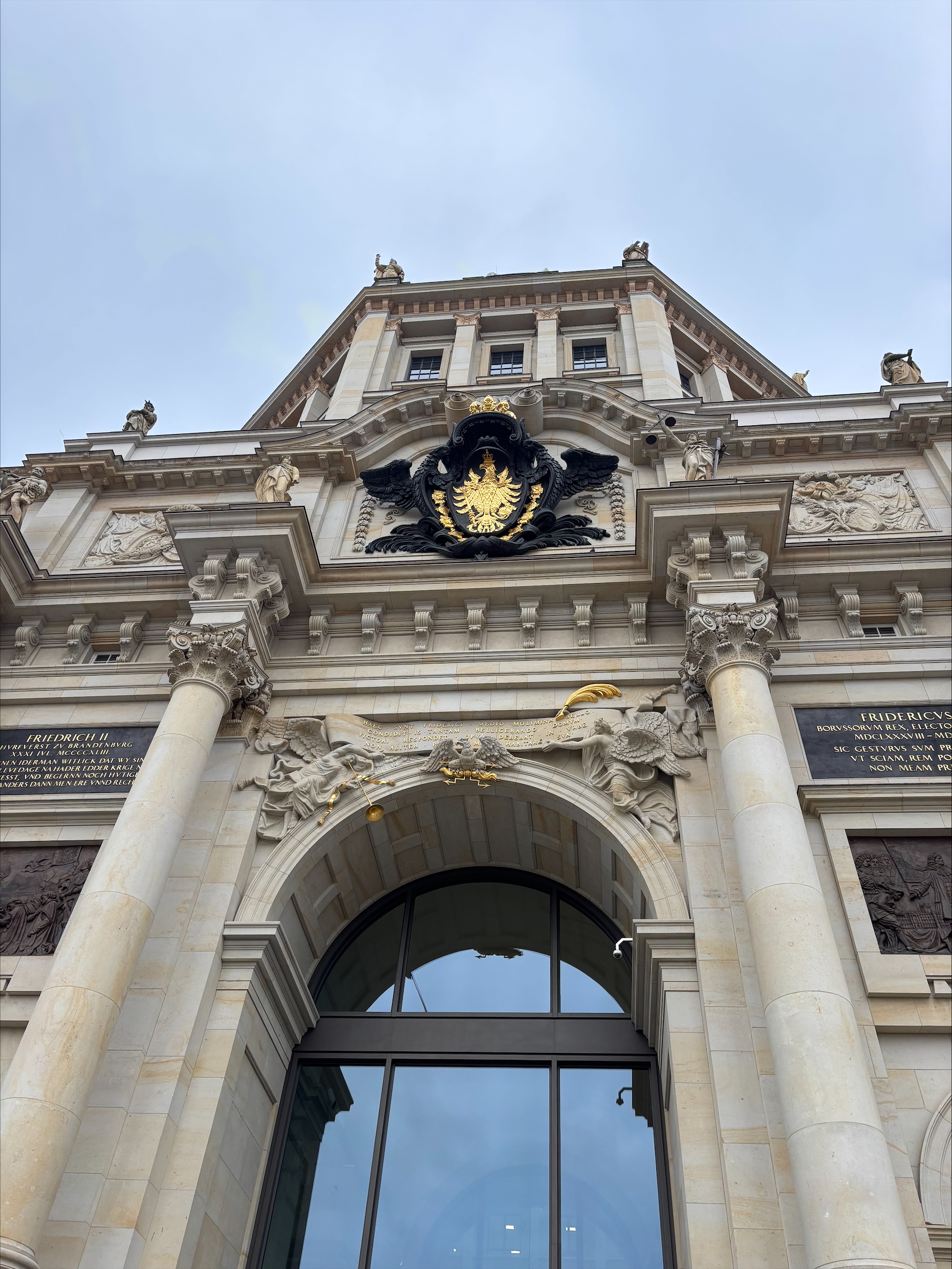
The Humboldt Forum, which opened in Berlin in 2021, is arguably the most emblematic site of Germany’s contemporary struggle with its colonial past. Built within a reconstructed Prussian palace, the Forum houses massive ethnological collections amassed during Germany’s imperial period. From the outset, the institution became a flashpoint for debates about colonial plunder, restitution, and national historical memory. The architectural symbolism of reconstructing an imperial palace, complete with Prussian façades, while filling it with objects taken from colonized communities exposes a profound contradiction at the heart of Germany’s cultural politics. The Forum attempts to position itself as a space of multicultural dialogue, yet its very structure embodies the continuity of imperial knowledge systems: European institutions framing and interpreting non-European cultural heritage through Western epistemic frameworks. The presence of human remains, sacred objects, and materials seized during military campaigns underscores how deeply embedded colonial practices remain within the Forum’s collections. Although the institution has engaged in provenance research and negotiated some returns, its core model of knowledge display still reflects the asymmetry of colonial power. It embodies the unresolved tension between Germany’s desire to appear globally progressive and its reluctance to fully dismantle the material legacy of empire.
Other German institutions exhibit similar patterns. Universities continue to house anthropological collections derived from colonial-era scientific racism. Municipal museums contain artifacts acquired through exploitative ethnographic expeditions. Some cities have begun to confront these histories by creating advisory committees or public exhibitions, yet the structural transformation of these institutions remains limited. These ongoing colonial formations reveal the extent to which Germany’s decolonial reckoning is incomplete. Even when policies acknowledge colonial injustices, the institutions that shaped and disseminated colonial knowledge continue to operate in frameworks created during the imperial period.
This brings us to the final question: What specific steps is Germany taking to reconcile with its colonial past? The answer is that Germany’s steps are real but partial, meaningful but inconsistent, and often overshadowed by enduring colonial structures. The recognition of the Herero and Nama genocide represents an important symbolic milestone but falls short of the reparations long demanded by descendant communities. The return of the Benin Bronzes signals a genuine shift in cultural policy, yet it is one of the few large-scale restitutions that has occurred systematically. Numerous museums remain at the early stages of provenance research and have yet to develop comprehensive restitution plans. Additionally, although funding for research and memory initiatives has expanded, this funding does not fundamentally change the institutional hierarchies that still privilege German control over African cultural heritage.
Germany’s more recent initiatives show some movement toward deeper accountability. Collaborative partnerships between German museums and African institutions have increased, emphasizing shared stewardship or co-curation models. Scholarly programs focused on decolonial theory and colonial history have gained visibility, particularly in universities in Berlin, Hamburg, and Munich. Some federal ministries have expressed willingness to explore broader frameworks for restitution. However, these developments remain uneven, and none fundamentally challenge the power imbalance that allows German institutions to decide when, how, and under what conditions restitution occurs. Reconciliation, in this sense, remains a process directed more by German institutions than by the communities harmed by colonial rule.
Ultimately, Germany’s marginal presence in global decolonization debates is symptomatic of deeper issues: a national memory culture that prioritizes one historical atrocity to the exclusion of another, institutional structures that dissipate responsibility, and policies that gesture toward accountability without transforming the systems that maintain colonial knowledge. Germany’s steps toward reconciliation, while not insignificant, remain constrained by political caution and institutional self-preservation. The persistence of colonial institutions such as the Humboldt Forum reveals how Germany’s confrontation with its imperial past remains incomplete. In the age of decolonizing knowledge, Germany continues to negotiate the tension between acknowledgment and avoidance, recognition and restraint, reform and preservation of the status quo. Meaningful reconciliation will require more than symbolic gestures or limited restitutions; it requires a fundamental restructuring of the institutions that continue to house, interpret, and legitimize the material legacy of empire. Until such a transformation occurs, Germany’s colonial past will remain not only insufficiently discussed but structurally embedded in the very institutions that define its cultural and intellectual life.
 The global movement to decolonize knowledge has increasingly broadened the scope of historical responsibility, compelling former imperial powers to confront the intellectual, cultural, and material legacies of empire embedded in their universities, museums, and political institutions. Yet even as the conversation has expanded to include subtler forms of epistemic and institutional colonization, Germany remains strikingly marginal in contemporary debates about colonialism. This absence is particularly surprising given the violent character of German colonial rule in Africa and the extensive impact of its ethnographic collecting, racial science, and military repression. This essay argues that Germany’s erasure from mainstream conversations on decolonization results from a powerful combination of historical narrative hierarchy, institutional fragmentation, and a national memory culture overwhelmingly dominated by the Holocaust. These forces have produced a public discourse in which German colonialism appears as an “add-on” to, rather than a constitutive part of, the nation’s history. I further argue that although Germany has taken intermittent steps toward acknowledging and addressing aspects of its colonial past, these steps remain inconsistent, limited in legal scope, and often overshadowed by the persistence of colonial institutions themselves most prominently with the Humboldt Forum. By examining why Germany is consistently left out of global decolonial discourse, what policies and practices speak to (or strategically avoid) its colonial history, and what specific steps it has initiated toward reconciliation, this essay reveals the deep structural reasons why Germany still struggles to meaningfully situate its colonial history within its contemporary political and cultural landscape.
To understand Germany’s current silence, one must first situate its imperial history within the broader context of the late nineteenth- and early twentieth-century scramble for Africa. Between 1884 and 1919, Germany established colonial enterprises in present-day Namibia, Tanzania, Cameroon, Togo, Rwanda, and Burundi. These colonies, though acquired relatively late compared to British, French, or Portuguese holdings, were marked by extraordinarily brutal policies. In German South West Africa, for instance, the genocide of the Herero and Nama between 1904 and 1908 constituted one of the earliest and most systematic episodes of racialized extermination in the twentieth century. Forced labor regimes, land seizures, concentration camps, the mass expropriation of livestock, and institutionalized racial hierarchies defined German rule not only in Namibia but across its African empire. In German East Africa, the suppression of the Maji Maji rebellion (1905–1907) resulted in widespread famine, scorched-earth military campaigns, and the deaths of hundreds of thousands of Africans. Simultaneously, German anthropologists, ethnologists, and natural scientists collected tens of thousands of cultural objects and human remains, transporting them to Berlin, Munich, Hamburg, Leipzig, and other German centers of research. These collections, which still reside in German institutions today, reveal the extent to which German colonialism was as much an intellectual and epistemological project as it was a territorial one. Despite this history, Germany’s role in African colonialism rarely figures centrally in popular or scholarly decolonization conversations which raises the first main question: Why is Germany consistently not mentioned regarding colonial holdings?
Germany’s absence stems in part from the unique structure of its modern memory culture. Since the end of World War II, the moral, pedagogical, and political project of reckoning with National Socialism has dominated German historical consciousness. The Holocaust stands at the center of German public memory, public education, legal redress, and national self-understanding. This focus is ethically necessary but has generated what many scholars describe as a “hierarchy of guilt,” in which earlier forms of racial violence, especially those committed against African peoples, appear subordinate to, or overshadowed by, the crimes of the Third Reich. As a result, German colonialism is framed less as a defining national history and more as a historical footnote, an unfortunate but distant precursor to the “real” rupture of 1933–1945. This narrative hierarchy not only minimizes the significance of German colonial rule but also creates an intellectual environment in which institutions can frame colonial crimes as “less urgent” or “less central” than the Holocaust. The effect is an unintentional but powerful marginalization that influences public memory, academic funding, museum policy, and school curricula.
 A second reason for Germany’s silence lies in the fragmentation of its cultural and political institutions. Unlike former colonial powers with centralized ministries or national museums responsible for colonial collections, Germany’s system is dispersed across federal, state, municipal, and foundation structures. The Prussian Cultural Heritage Foundation, Länder governments, local museum associations, and independent scholarly institutes all share responsibility for holdings derived from colonial contexts. This decentralized system prevents the development of a cohesive national policy toward restitution, remembrance, or reparations. Without a strong central authority mandating decolonial action, progress occurs in piecemeal fashion: some museums launch provenance research, others remain passive; some cities rename streets or districts, others resist such changes. The absence of a unified legal or political framework enables inertia and allows cultural institutions to maintain colonial-era structures sometimes in ways that actively reinforce imperial nostalgia.
Furthermore, Germany’s relatively late entry into colonialism contributes to the perception that its empire was both short-lived and less globally influential than those of Britain or France. In international media narratives, postcolonial scholarship, and activist networks, especially those operating primarily in Anglophone and Francophone contexts, attention tends to gravitate toward former empires with long-standing linguistic and geopolitical reach. Germany, having lost its colonies after World War I, does not figure in the same way in the political, economic, or cultural infrastructures of the postcolonial world. This perception, though empirically misleading in terms of the intensity of German colonial violence, nevertheless affects how often Germany is invoked in broad decolonial critiques. The issue is compounded by Germany’s self-presentation in global diplomacy: officials have at times framed colonial wrongs as “historical tragedies” rather than as violations with ongoing legal and political implications. This rhetorical strategy has the effect of softening demands for accountability and, consequently, lowering Germany’s visibility in transnational reparations debates.
Although Germany’s colonial past is often minimized, it is not entirely absent from public policy. This leads to the second main question: What policies, laws, or practices in Germany directly comment on its colonial past? In the last decade, Germany has taken several steps to acknowledge aspects of colonial violence, though these actions vary in consistency and depth. One of the most significant was the 2021 decision by the German government to officially recognize the Herero and Nama genocide. This recognition, which followed years of diplomatic negotiation with Namibia, included a pledge of €1.1 billion for development projects. Yet the announcement was as contested as it was historic. Many Herero and Nama representatives argued that Germany’s funding was not genuine reparations but rather a symbolic offering that sidestepped legal liability. The decision, while important, illustrates Germany’s general approach: a willingness to acknowledge the past rhetorically while carefully avoiding legal frameworks that might compel long-term accountability.
Another significant area of policy development lies in provenance research. Since the mid-2010s, federal and state governments have supported systematic investigations into the origins of colonial-era collections. Funding programs have expanded, scholarly networks have been established, and museum guidelines have been revised to emphasize transparency and ethical responsibility. These developments represent meaningful change; however, they are not supported by a binding restitution law. In the absence of a national legal mandate, returns of objects or human remains depend on negotiations between individual institutions and governments of origin, creating inconsistent outcomes. Some museums have pursued proactive returns, such as the transfer of ownership of the Benin Bronzes to Nigeria, while others have delayed action pending further research or internal review. The lack of legal compulsion means that Germany’s colonial reckoning suffers from variable institutional commitment rather than unified national responsibility.
Germany has also enacted symbolic policies, such as renaming streets bearing colonial-era names, issuing public statements, or funding exhibitions about colonialism. While these measures foster public awareness, they rarely address the structures of knowledge production that sustained German empire in the first place. In this sense, Germany’s policies illustrate a broader pattern: gestures toward acknowledgment without a transformation of the institutions that still house colonial epistemologies. This dynamic is particularly visible in the Humboldt Forum.
The Humboldt Forum, which opened in Berlin in 2021, is arguably the most emblematic site of Germany’s contemporary struggle with its colonial past. Built within a reconstructed Prussian palace, the Forum houses massive ethnological collections amassed during Germany’s imperial period. From the outset, the institution became a flashpoint for debates about colonial plunder, restitution, and national historical memory. The architectural symbolism of reconstructing an imperial palace, complete with Prussian façades, while filling it with objects taken from colonized communities exposes a profound contradiction at the heart of Germany’s cultural politics. The Forum attempts to position itself as a space of multicultural dialogue, yet its very structure embodies the continuity of imperial knowledge systems: European institutions framing and interpreting non-European cultural heritage through Western epistemic frameworks. The presence of human remains, sacred objects, and materials seized during military campaigns underscores how deeply embedded colonial practices remain within the Forum’s collections. Although the institution has engaged in provenance research and negotiated some returns, its core model of knowledge display still reflects the asymmetry of colonial power. It embodies the unresolved tension between Germany’s desire to appear globally progressive and its reluctance to fully dismantle the material legacy of empire.
 Other German institutions exhibit similar patterns. Universities continue to house anthropological collections derived from colonial-era scientific racism. Municipal museums contain artifacts acquired through exploitative ethnographic expeditions. Some cities have begun to confront these histories by creating advisory committees or public exhibitions, yet the structural transformation of these institutions remains limited. These ongoing colonial formations reveal the extent to which Germany’s decolonial reckoning is incomplete. Even when policies acknowledge colonial injustices, the institutions that shaped and disseminated colonial knowledge continue to operate in frameworks created during the imperial period.
This brings us to the final question: What specific steps is Germany taking to reconcile with its colonial past? The answer is that Germany’s steps are real but partial, meaningful but inconsistent, and often overshadowed by enduring colonial structures. The recognition of the Herero and Nama genocide represents an important symbolic milestone but falls short of the reparations long demanded by descendant communities. The return of the Benin Bronzes signals a genuine shift in cultural policy, yet it is one of the few large-scale restitutions that has occurred systematically. Numerous museums remain at the early stages of provenance research and have yet to develop comprehensive restitution plans. Additionally, although funding for research and memory initiatives has expanded, this funding does not fundamentally change the institutional hierarchies that still privilege German control over African cultural heritage.
Germany’s more recent initiatives show some movement toward deeper accountability. Collaborative partnerships between German museums and African institutions have increased, emphasizing shared stewardship or co-curation models. Scholarly programs focused on decolonial theory and colonial history have gained visibility, particularly in universities in Berlin, Hamburg, and Munich. Some federal ministries have expressed willingness to explore broader frameworks for restitution. However, these developments remain uneven, and none fundamentally challenge the power imbalance that allows German institutions to decide when, how, and under what conditions restitution occurs. Reconciliation, in this sense, remains a process directed more by German institutions than by the communities harmed by colonial rule.
Ultimately, Germany’s marginal presence in global decolonization debates is symptomatic of deeper issues: a national memory culture that prioritizes one historical atrocity to the exclusion of another, institutional structures that dissipate responsibility, and policies that gesture toward accountability without transforming the systems that maintain colonial knowledge. Germany’s steps toward reconciliation, while not insignificant, remain constrained by political caution and institutional self-preservation. The persistence of colonial institutions such as the Humboldt Forum reveals how Germany’s confrontation with its imperial past remains incomplete. In the age of decolonizing knowledge, Germany continues to negotiate the tension between acknowledgment and avoidance, recognition and restraint, reform and preservation of the status quo. Meaningful reconciliation will require more than symbolic gestures or limited restitutions; it requires a fundamental restructuring of the institutions that continue to house, interpret, and legitimize the material legacy of empire. Until such a transformation occurs, Germany’s colonial past will remain not only insufficiently discussed but structurally embedded in the very institutions that define its cultural and intellectual life.
